
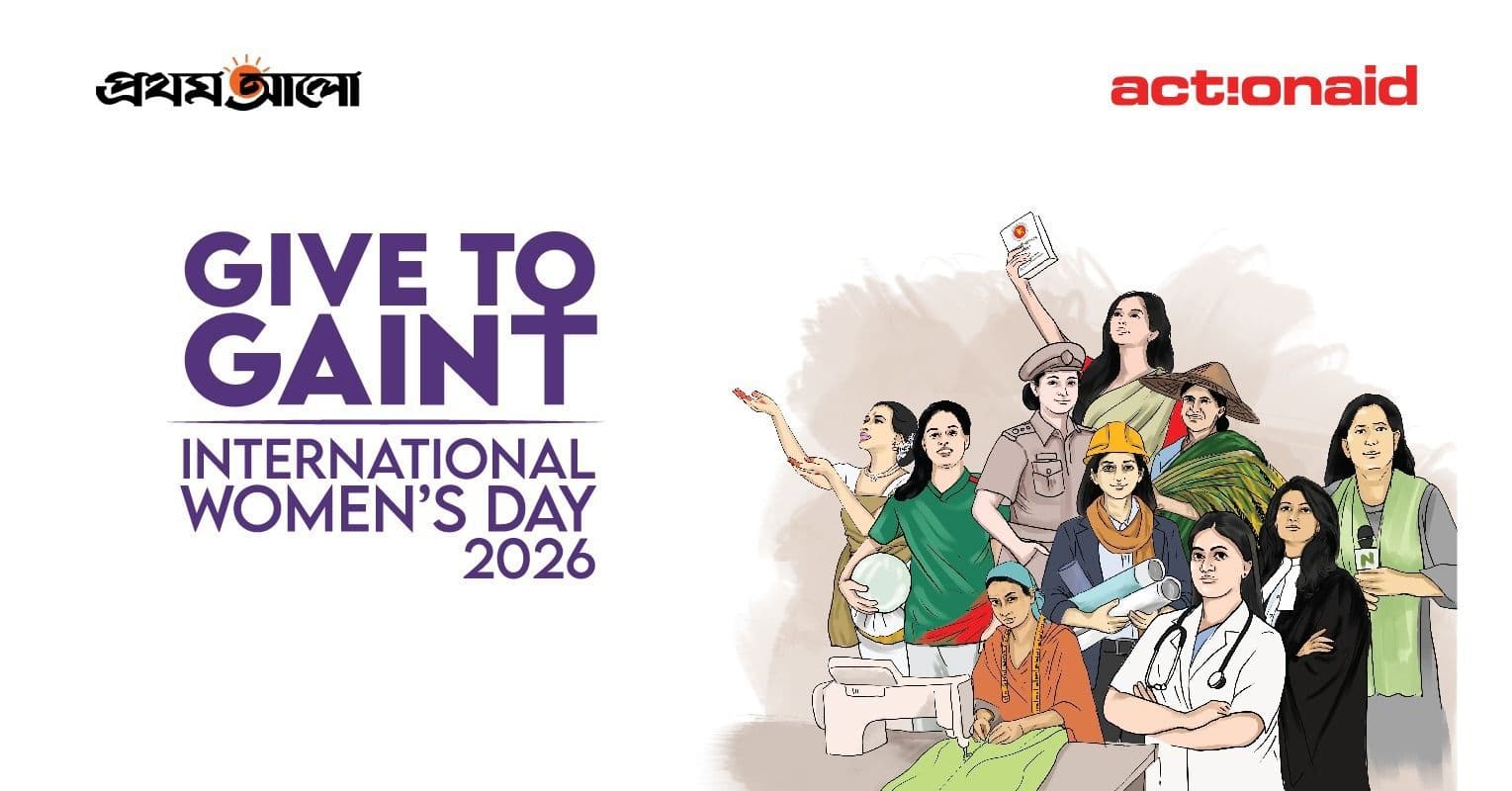
International Women’s Day 2026 is observed under the global theme “Give to Gain,” highlighting the transformative power of reciprocity, solidarity, and collective support in advancing women’s rights and leadership. The theme underscores that investing in women’s empowerment through recognition, inclusion, and shared responsibility strengthens societies and fosters a more just and interconnected world.
In this context, and following the 13th National Parliament Election of Bangladesh, ActionAid Bangladesh (AAB) plans to celebrate International Women’s Day 2026 by centring women’s political participation, representation, and leadership. The celebration will focus on celebrating women who entered politics, understanding the challenges they faced, and capturing the learning from their journeys to inspire future women leaders.
Globally and in Bangladesh, women in politics continue to face discrimination, violence, tokenism, and exclusion from decision-making processes. Yet women persist, navigating resistance, developing learning and strategies through experience, and paving the way for other women to follow. International Women’s Day 2026 serves as a critical moment to amplify this collective resilience and determination. No matter how entrenched sexism may be or how discouraging political environments become, women refuse to retreat. Instead, they rise together, claiming their mandate and advocating for the rights and empowerment of all women and girls.
Available secondary data from media reports and election analyses suggest that women’s participation as candidates in Bangladesh’s national parliamentary elections has historically remained low, though a gradual increase is visible over time. In the early national elections following independence, the number of female candidates contesting general seats was minimal and not systematically documented. More consistent data become available from the 1990s onwards. During the 5th and 6th National Parliament Elections in the 1990s, the number of female candidates reportedly remained below 40. In the 7th and 8th National Parliament Elections (2001 and 2008), the number showed a modest rise, fluctuating roughly between 40 and 50 candidates. A decline was observed in the 9th National Parliament Election (2014), when fewer than 30 women reportedly contested general seats. The 10th and 11th National Parliament Elections marked a gradual increase again, with approximately 60–70 female candidates in 2018 and close to 90–100 candidates in the subsequent election cycle. For the upcoming 13th National Parliament Election, media reports indicate that around 109 women have filed nomination papers, suggesting a potential increase compared to previous elections. However, even with this increase, women are expected to constitute only around 4-5 percent of the total candidates, highlighting the persistent under-representation of women in Bangladesh’s electoral politics despite numerical growth over time.
Against this backdrop, AAB will organise an event to celebrate women who have entered politics, document the challenges they faced and the learning gained from their journeys, and translate these experiences into inspiration and guidance for future women leaders.
Objectives
The objective of the event is to recognise and celebrate women political leaders and activists who have challenged patriarchy and social stigma, while reinforcing the importance of women’s leadership in fostering inclusive, democratic, and accountable governance. It also seeks to highlight the challenges, learning, and leadership journeys of women who participated in the 13th National Parliament Election and to use their shared experiences to inspire and encourage other women and girls to engage in politics in the future, in line with the “Give to Gain” ethos.
Program Design
The discussion sessions aim to both celebrate women’s participation in electoral politics and critically explore the historical legacy and current state of women’s engagement in political leadership and national policymaking processes.
The session will examine the structural, social, and political factors that continue to constrain women’s political empowerment, while also highlighting enabling conditions, strategies, and success stories that have supported women’s political journeys despite persistent gender inequalities. Importantly, the discussions will create a dedicated platform for women candidates to share their lived experiences, challenges, learning, and aspirations, with the objective of inspiring future women leaders and strengthening collective advocacy for inclusive political participation.
The event will include the screening of a series of short audio-visual contents that capture the journeys, experiences, and reflections of women engaged in politics and public leadership.
Participants:
Female MP Nominees of the 13th National Parliament Election, government bodies (MOWCA, policymakers, local government representatives), INGOs, development partners, embassies, civil society organizations (CSOs): Women's rights groups, youth organizations, community leaders; media partners (digital platforms, newspapers, influencers), private sectors and community members.