SUPER Project
Introduction
Project Name:Strengthening Urban Public-Private Programming for Earthquake Resilience (SUPER)
Donor:European Civil Protection and Humanitarian Aid Operations (ECHO)
Project Activities:
- Establish Private Sector Emergency Operation Centre (PEOC) in synergy with the National Emergency Operation Center (NEOC).
- Develop private sector’s emergency response team and ensure coordination with Urban Search and Rescue Team.
- Facilitate coordinated Lobby, Advocacy and Campaign initiatives targeting duty bearers and non-governmental humanitarian actors.
- Activating the Private Sector Working Group within Humanitarian Coordination Task Team (HCTT).
- Conduct awareness and sensitization sessions targeting RAJUK, REHAB, Bangladesh Bank, NBFIs for Risk informed financing.
- Support in organizing a private sector led knowledge and innovation platform at national level for Earthquake Preparedness and Disaster Risk Management.
- Risk communication and social mobilization through media to promote EQ risk aversion culture engaging children and youth.
Project Focus Areas:
1. Coordination mechanisms and synergies between private sector, governmental and non-governmental actors are established to strengthen urban emergency preparedness and response.
2. Nexus synergy among various level of response agencies, authorities, private sector and community initiated in a coordinated manner.
Background
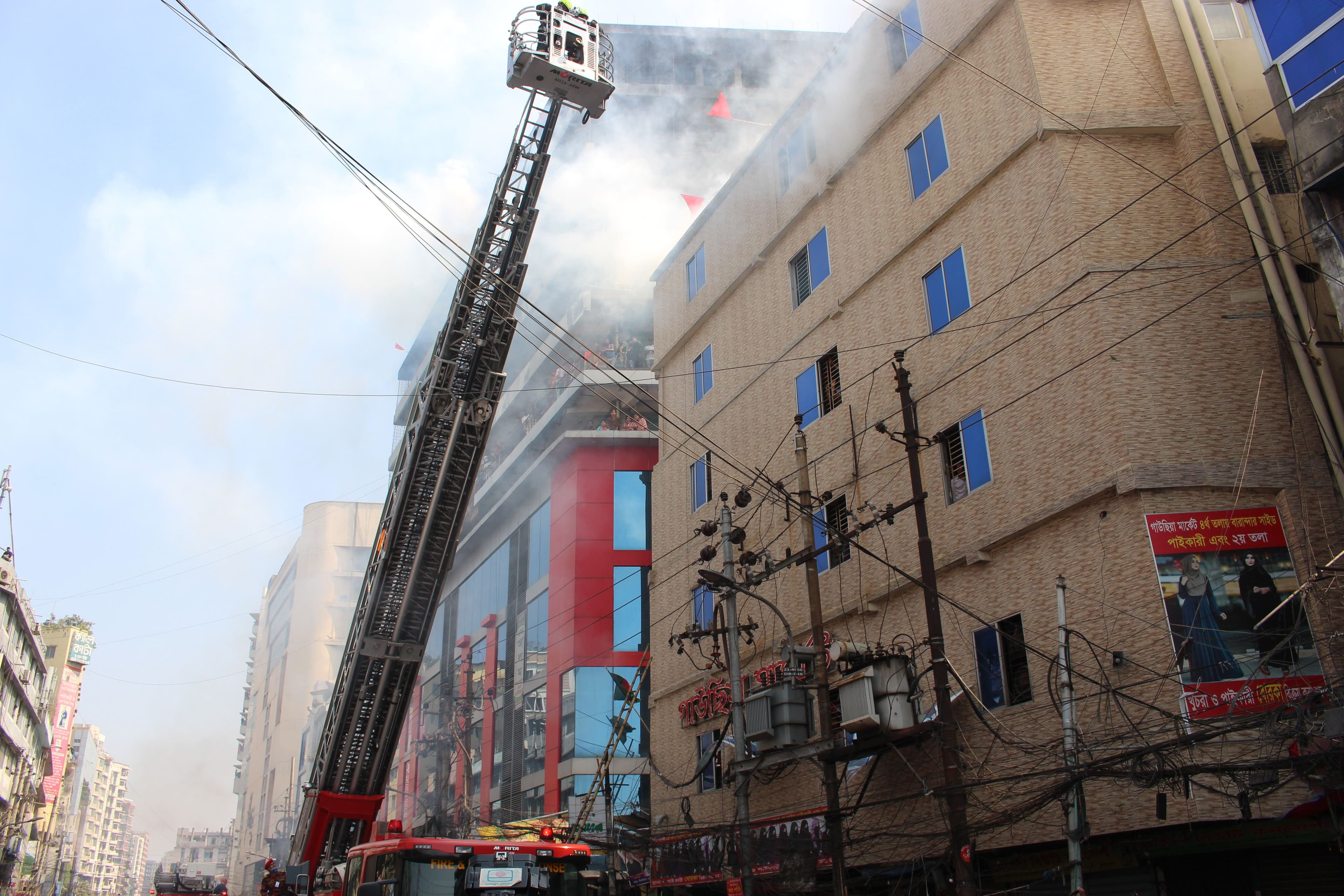
Bangladesh sits at the intersection of three major tectonic plates with five major fault lines identified in the country. While the movement of these plates has been at a relatively low level historically, increased seismic activity raises the risk of earthquakes (EQ) in the region. The risk and forecast impact are compounded by rapid development and population growth. Dhaka is currently expanding rapidly into surrounding marsh and river lands as the private sector develops new high rises to accommodate the growing population and middle class as well as expanding MSMEs. Many of these structures are unregulated and built outside of existing building codes and with low quality materials. They are further at risk due to lack of established evacuation routes and construction on poorly built landfills which are particularly susceptible to earthquakes due to liquification and other foundational risks. Vulnerable lifeline facilities such as power stations and utilities further increase the seismic risk of these dense urban areas. According to the HCTT contingency plan 2019, an earthquake of 6 magnitude will have a probable impact of minimum 79,055 loss of lives, 199,785 injuries and 4,476,128 displaced population. It will also cause at least moderate damage to 28% of houses. Initial steps have been taken by the government in order to establish an earthquake preparedness and response structure and related policies. Despite this, there is no clear initiatives to involve private sector in EQDRM activities that can create synergy with community and government’s effort. It is therefore urgent that the private sector be incorporated into EQDRM and incentivized to participate and invest at this critical stage in the country’s development.
The lack of engagement with the private sector is a missed opportunity that could considerably increase the resource available for EQDRM programmes. The private sector can offer sustainable funding and linkages to corporate social responsibility (CSR) opportunities as well as human resources, equipment, machineries and expertise for EQDRM in urban spaces and is a critical missing link in achieving comprehensive EQDRM across Dhaka city area. Closing gaps in public and private sector collaboration to reduce risks and vulnerability of the new urban development-funded projects, as mentioned in the GoB’s 7th Five Year plan which highlights the need of risk informed financing and development support from the private sector.